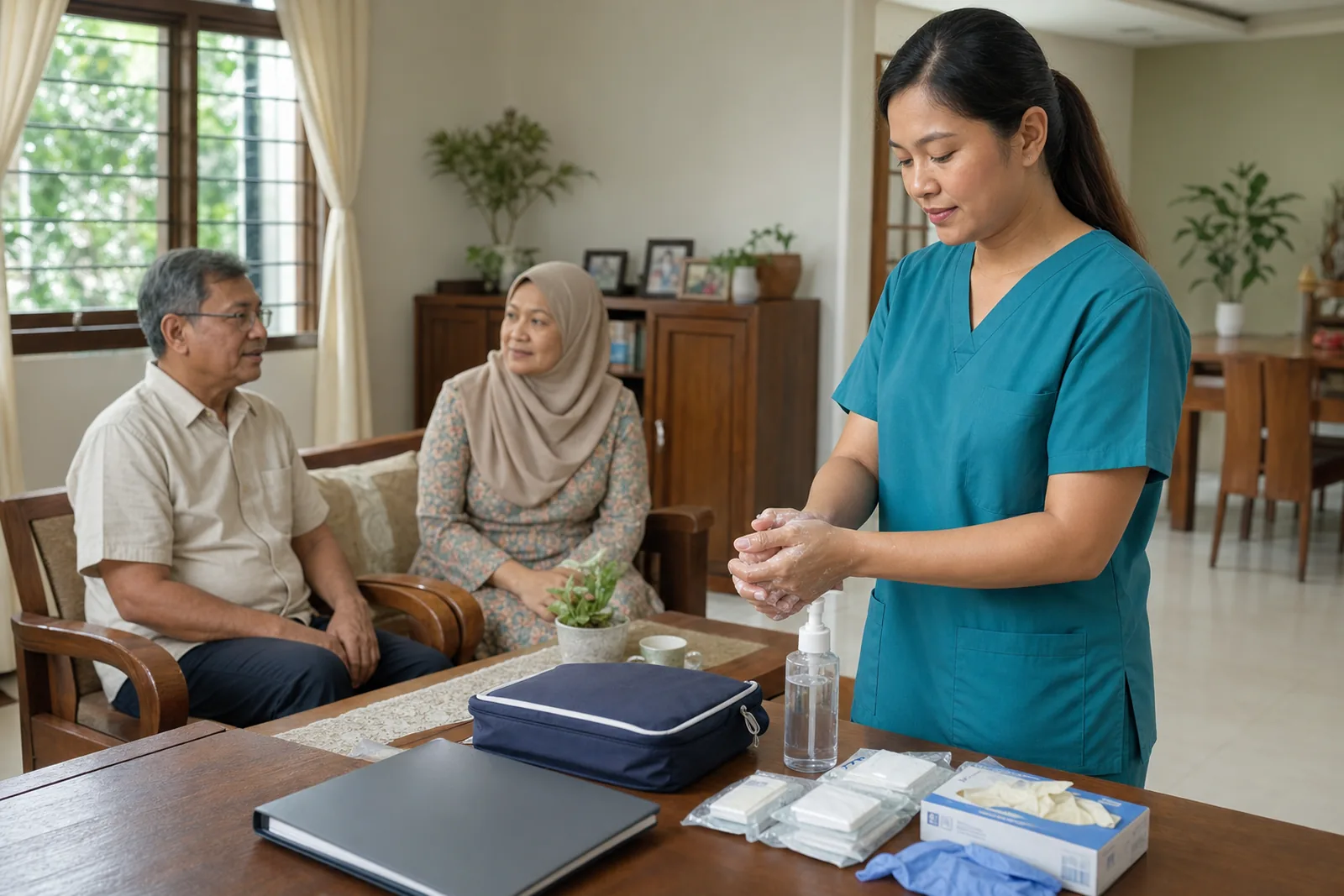
Traumatic Wound Care at Home
Arrange urgent medical assessment for uncontrolled bleeding, exposed deeper tissue, a retained object, loss of movement or sensation, an animal or human bite, major contamination, or injury near the eye. Home nursing is for continuing an agreed wound plan—not for ruling out fractures, tendon damage, internal injury or the need for surgery.
Who this guide is for
- Families managing a stable wound after emergency or clinic assessment
- Older adults with fragile skin tears and a written treatment plan
- People needing follow-up dressing changes because travel is difficult
What the nurse needs to establish
The visit begins with the mechanism of injury because a clean kitchen cut, a road abrasion and a skin tear after a fall carry different risks. The nurse checks the existing medical plan, pain, bleeding, wound edges, surrounding skin, circulation, sensation and whether movement has changed.
A dressing change cannot answer every diagnostic question. If there is concern about a fracture, tendon or nerve injury, a foreign body, deep contamination or tissue viability, the correct next step is medical reassessment.
- Time and mechanism of injury
- Where the wound was first assessed
- Tetanus advice and prescribed products
- Diabetes, circulation, immune problems and blood-thinning medicines
How a planned home visit works
Before the appointment, the family shares the written instructions and current supplies. The nurse confirms identity and consent, inspects the wound, performs the authorised care using appropriate infection-control measures, records observations and explains the next review point.
Continuity matters more than changing products frequently. Unless the treating clinician changes the plan, the nurse follows the agreed cleansing method, dressing type and schedule and reports findings that fall outside it.
Between visits
Keep the dressing as instructed and protect it from dirt, friction and unplanned soaking. Do not add antiseptics, powders, traditional remedies or leftover antibiotics without clinical advice, because they may irritate tissue or obscure deterioration.
Use the same daily observation routine: note pain, temperature if unwell, strike-through on the dressing, odour, swelling, redness and function. A clear record helps the next clinician distinguish gradual healing from a meaningful change.
Primary sources
Sources support general principles; the individual treating team’s instructions take priority.
What matters before arranging a visit
Support that may be relevant
- Confirm how the injury happened and when
- Assess bleeding, contamination, depth, circulation and function
- Follow the prescribed cleansing and dressing plan
- Document progress and escalate deterioration
How a home visit is planned
- Bring the discharge note, tetanus advice and dressing instructions
- Describe allergies, diabetes, circulation problems and medicines
- Keep the wound protected between visits
- Agree who to contact if pain, swelling or discharge increases
Ask about traumatic wound care at home
The WhatsApp message mentions this page and leaves space for your city or suburb. The provider must confirm suitability, scope, timing and fees before any visit.
Ask on WhatsAppSafety boundaries and escalation
- Call 999 for life-threatening bleeding, collapse or major trauma
- Do not remove an embedded object or probe a deep wound
- Increasing redness, heat, swelling, pus, fever or worsening pain needs medical review
This website is not an emergency service. Call 999 if someone has severe breathing difficulty, chest pain, heavy bleeding, sudden weakness, loss of consciousness or rapid deterioration.
Questions families often ask
Can every accident wound be treated at home?
No. The wound first needs appropriate medical assessment when depth, contamination, structural injury, bleeding or tetanus protection is uncertain.
What should I send before booking?
Share a non-graphic description, when and how the injury occurred, the treating clinician’s plan, relevant conditions and the home location.
Updated: 29 July 2026 • Sources and clinical instructions must be confirmed for each case.