Is this suitable for a home visit?
Home nursing helps a pressure injury heal by addressing the pressure, moisture and equipment causes alongside regular dressings. Arrange assessment when skin remains red or discoloured after pressure relief, blisters, breaks, becomes dark or develops deeper tissue loss.
Find every source of pressure and shear
Inspect skin over the sacrum, hips, heels, ankles, elbows, spine, back of the head and beneath masks, tubing, splints and other devices. Ask how long the person spends in each position, whether they can shift weight, how transfers are performed and where sliding or friction occurs.
Assess moisture from urine, stool, perspiration, wound fluid and wet linen. Add nutrition, hydration, circulation, cognition, pain, medicines and illness severity. The result should explain why this person is at risk rather than simply assigning a generic score.
- Full skin and device check
- Bed and chair pressure map
- Transfer and shear assessment
- Moisture, nutrition and medical contributors
Convert assessment into a 24-hour prevention plan
Write acceptable positions, aids, frequency and who assists for bed, chair and wheelchair time. Include heel off-loading, head-of-bed limits where clinically appropriate, continence care, linen and clothing, daily skin checks and what to do when redness does not fade.
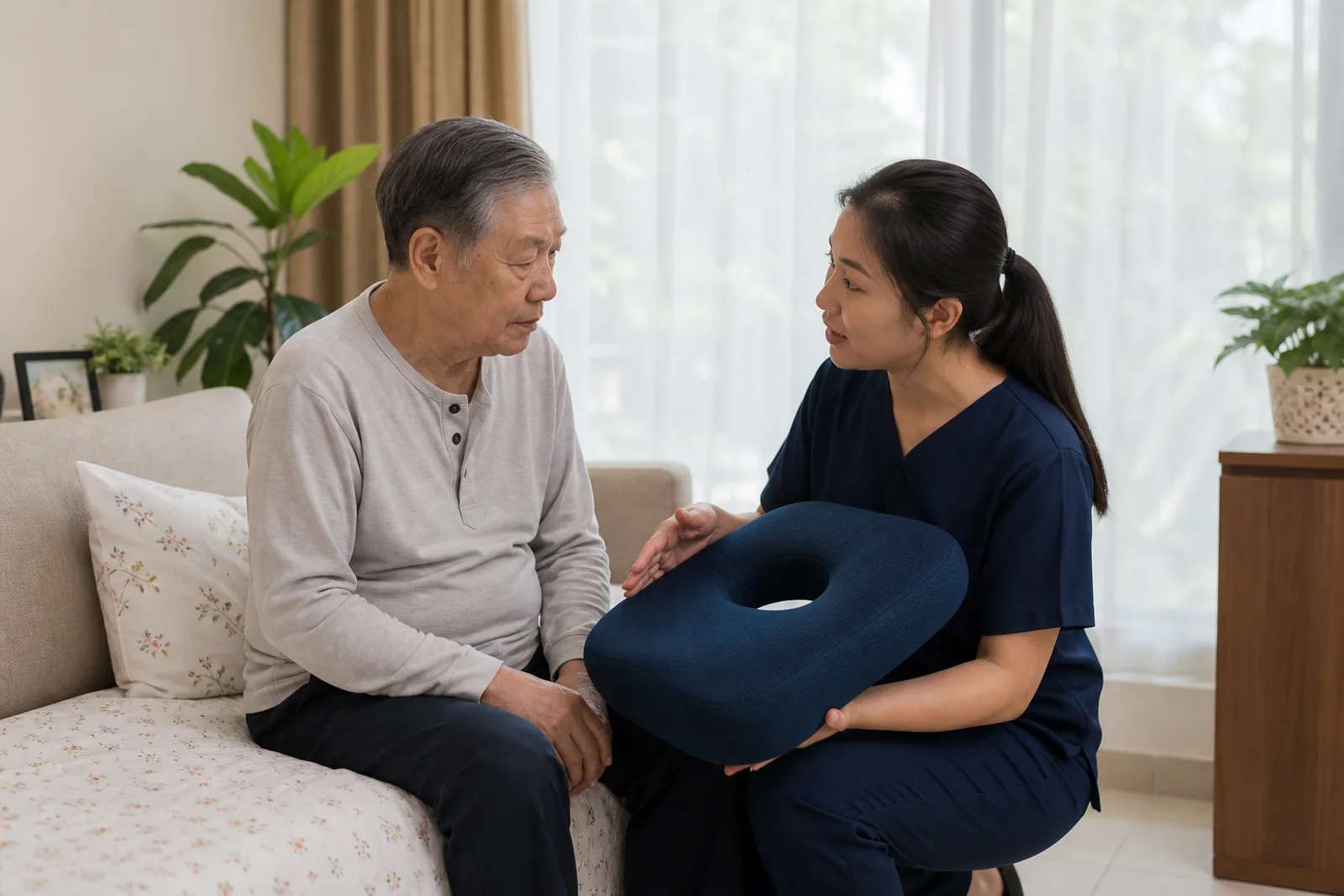
Choose support surfaces through assessment and supplier guidance. A mattress or cushion must fit the person, bed or chair and care goals. Check whether it bottoms out, traps heat, changes transfer safety or creates new pressure at edges and devices.
- Individual positions and intervals
- Named responsibility for each shift
- Equipment fit and maintenance
- Immediate response to a new skin change
Treat the wound and the cause together
Follow the authorised cleansing, dressing and review plan while maintaining pressure redistribution. Measure in a consistent position and method, record tissue and surrounding skin, and distinguish pressure damage from moisture-associated or other skin conditions when qualified to do so.
Review the plan after any deterioration, fall, illness, equipment change or change in mobility. Family training should use hands-on positioning that protects both patient and helper, with backup arrangements for nights and times when two people are needed.
Primary sources
These sources support the general principles on this page. The individual treating team’s instructions take priority.
- Nursing Division, Ministry of Health Malaysia: Registration and Annual Practising Certificate (APC)Malaysia · regulator guidance
- Nursing Division, Ministry of Health Malaysia: Acts and guidelines for nursing practiceMalaysia · regulator guidance
- National Institute for Health and Care Excellence: Pressure ulcers: prevention and managementUnited Kingdom; general clinical principles · clinical guideline
- NHS: Pressure ulcer guidanceInternational or source jurisdiction; general principles only · authoritative public guidance
Sources checked: 2026-08-02
What to consider before arranging a visit
Support that may be relevant
- Assess skin, pressure exposure, shear, moisture, mobility and nutrition
- Use a documented repositioning and support-surface plan
- Stage or describe the injury only within the right skills and experience and policy
- Track dimensions, tissue, pain and surrounding skin over time
What to prepare and confirm
- Map every bed, chair, wheelchair and device contact point
- Choose repositioning intervals from assessment, not a universal clock
- Match mattress and cushion to risk, body shape and function
- Assign who checks skin and turns the person on every shift
Ask about pressure injury care
Send a WhatsApp message and our team will help you arrange a home nurse visit. It notes this page and leaves room for your area. The nurse or provider confirms suitability, timing and fees before any visit.
To protect privacy, please don’t send an identity-card number, full medical record or an identifiable wound photo in your first message.
Ask about pressure injury careSafety boundaries and when to seek other care
- Do not massage persistent redness or place ring-shaped supports under an injured area
- Do not rely on an expensive mattress without repositioning, skin checks and moisture management
- New systemic illness, rapidly worsening tissue or severe pain requires urgent clinical review
Call 999 for immediate danger or a medical emergency. This website and its WhatsApp enquiries do not provide emergency triage.
Questions families ask
How often should a bedridden person be turned?
There is no safe universal interval. Skin tolerance, surface, position, medical stability, pain, sleep and mobility determine an individual schedule that must be checked and adjusted.
Can a pressure injury be managed entirely at home?
Some stable injuries can follow a home plan with clinical oversight. Deep, worsening, infected, poorly perfused or diagnostically uncertain wounds need medical or specialist assessment.