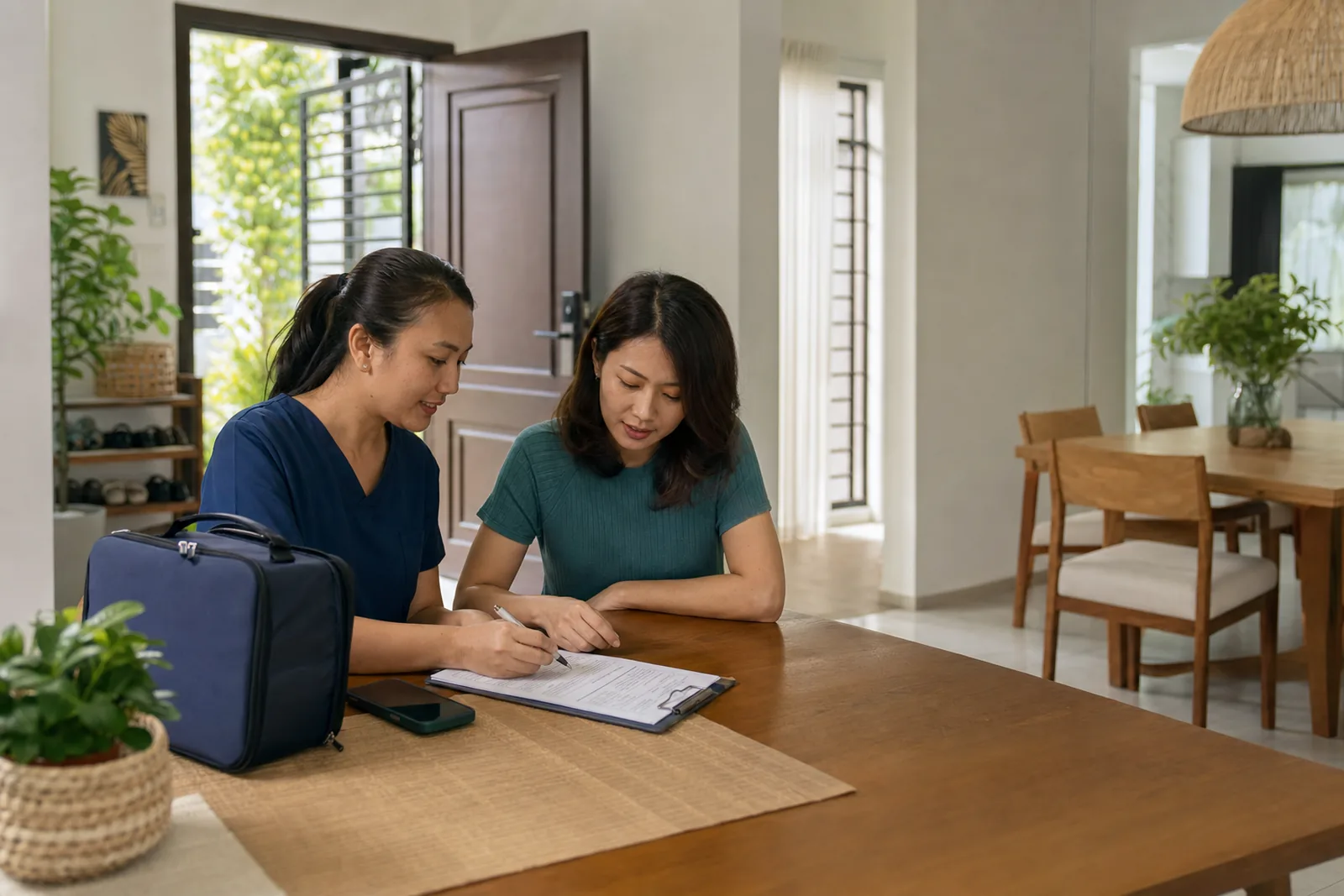
Worried About Letting an Unknown Home Nurse Inside?
Before the visit, confirm the provider through an independently obtained contact, then record the appointment date, arrival window, assigned name if available, task and substitution process. Ask what identifier the worker carries and what information the provider will never request at the door. On arrival, keep the door secured while checking the name and appointment; call the confirmed provider channel if anything differs. Allow access only to the patient, clinical area, handwashing point and agreed supplies. Secure unrelated documents, medicines, keys, payment cards and valuables. After the visit, check the note and report any unexpected person, request, photograph, payment demand or missing item promptly.
Who this guide is for
- Patients living alone who are anxious about admitting a visiting nurse
- Families arranging care remotely and unable to meet every worker
- Households wanting a repeatable protocol for substitutes and unexpected arrivals
Verify the provider before sharing the home
Obtain the provider's contact from its established official material or a trusted referral, not from an unsolicited message alone. Confirm that the booking exists, the service address and clinical task are correct, and how the provider communicates arrival changes. Ask whether the assigned name can be shared and what staff identifier is used without requesting a private identity-card image through WhatsApp.
Agree a code, booking detail or call-back method appropriate to the provider. A uniform, equipment bag or knowledge of health details is not sufficient proof because information can be copied. If a family member arranges remotely, the patient should receive the same verified arrival information in a form they can understand and retrieve.
Control access without making the clinical visit unworkable
Prepare one route from the entrance to the patient, handwashing point and clinical area. Secure unrelated rooms, documents, spare keys, payment instruments, medicines belonging to others and valuables. Keep the patient's current orders, medicines and supplies available; hiding relevant clinical information in the name of security can make care unsafe.
If the patient has hearing, vision, mobility or cognitive difficulty, arrange an authorised contact or tested door protocol. Avoid publicly visible key locations or access instructions in casual messages. Decide how long a worker waits when nobody answers, who is called, and when a welfare or emergency response is appropriate.
Handle substitutions, payments and concerns through a defined process
Staff changes can occur, but they should follow the provider's stated notification and handover process. If an unexpected person arrives, keep the door secured and call the verified provider number rather than the number supplied by the visitor. Confirm that the substitute has the correct booking without revealing extra patient details first.
Use the agreed payment route and question any new door-step request, personal transfer account or pressure for codes or documents. After the visit, review the note, supplies and property calmly. Record the time, person, request and evidence for any concern, preserve relevant messages or camera footage lawfully, and report through the provider and appropriate authorities. Do not make public accusations without verified facts.
Primary sources
Sources support general principles; the individual treating team’s instructions take priority.
What matters before arranging a visit
Support that may be relevant
- Booking verified through an independent confirmed channel
- Identity and substitution protocol agreed before arrival
- Access limited to necessary people, rooms and information
- Unexpected requests and incidents documented promptly
How a home visit is planned
- How the household independently confirms the provider and booking
- Which identifier is appropriate and how substitutions are announced
- Which rooms, records and items the worker needs to access
- Who responds if identity, conduct, payment or property concerns arise
Ask about Verifying and safely admitting a visiting home nurse at home
The WhatsApp message mentions this page and leaves space for your city or suburb. The provider must confirm suitability, scope, timing and fees before any visit.
Ask on WhatsAppSafety boundaries and escalation
- Do not open the door solely because someone wears a uniform or knows the patient's name
- Do not send identity documents, banking credentials, one-time codes, keys or full medical records to an unverified contact
- Do not physically confront a suspicious visitor; keep the door secured, contact the confirmed provider and seek police or emergency help if threatened
- Do not let verification delay emergency services when there is immediate clinical danger
This website is not an emergency service. Call 999 if someone has severe breathing difficulty, chest pain, heavy bleeding, sudden weakness, loss of consciousness or rapid deterioration.
Questions families often ask
What if a different nurse arrives?
Keep the door secured and contact the provider through the independently verified channel. Confirm the substitution, booking and identifier before admitting the person. Do not rely only on the visitor's phone number or explanation.
Should I ask to photograph the nurse's identity card?
Ask the provider what approved identifier and verification process it uses. Copying a worker's private identity document may create another privacy risk and may not be appropriate. Record the booking and provider-confirmed worker details instead.
Updated: 29 July 2026 • Sources and clinical instructions must be confirmed for each case.