Is this suitable for a home visit?
A foot wound on someone with diabetes deserves early attention, because a small break can be more serious than it looks. A new break, blister, colour change or unexplained swelling on a diabetic foot deserves timely assessment even when the pain is mild.
Look beyond the visible opening
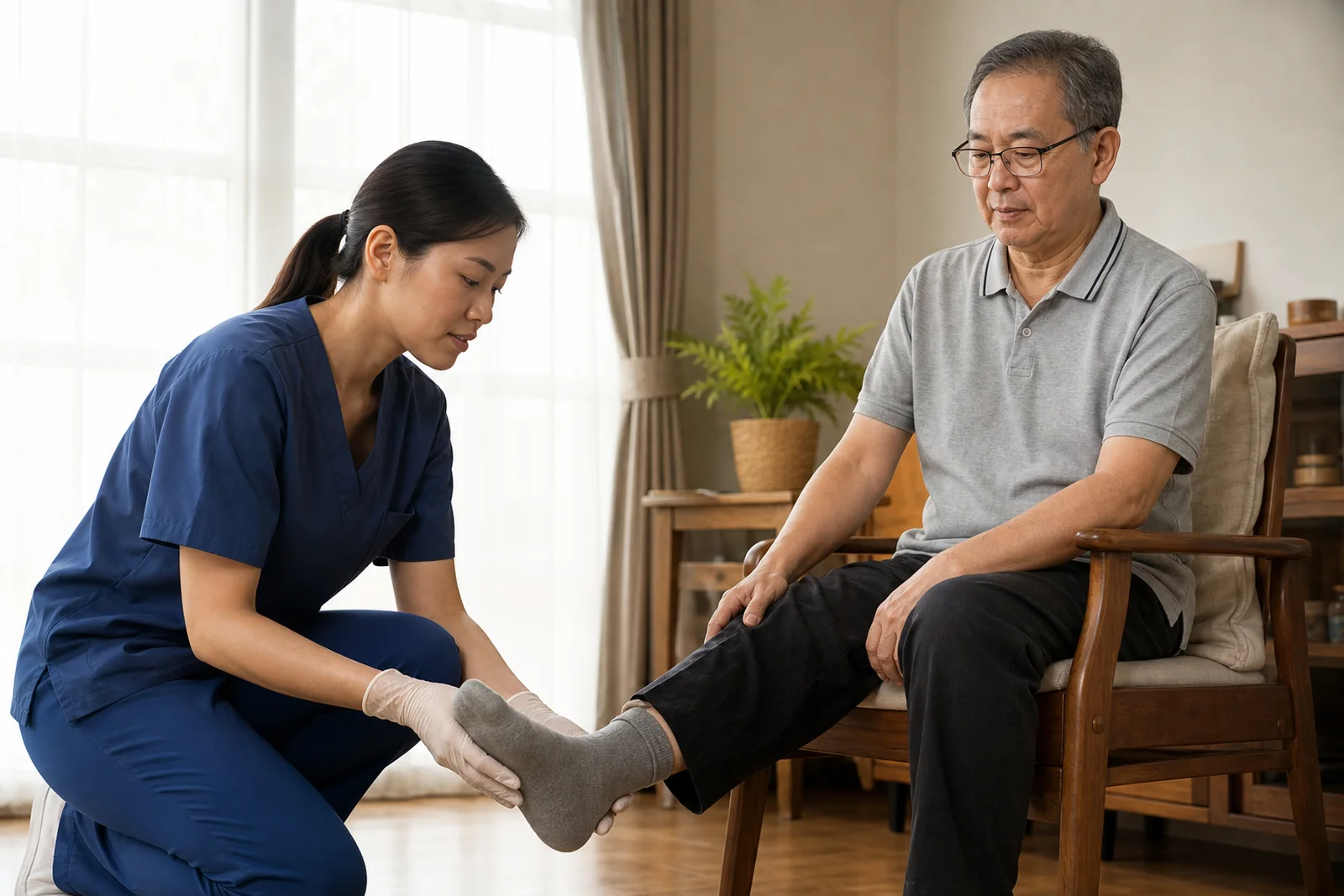
The nurse notes where the wound is and what caused it, then checks both feet, between the toes, the heels and the pressure points. Skin temperature and colour, swelling, pulses or available circulation findings, protective sensation, any deformity, callus, a previous ulcer or amputation, and the current footwear are all reviewed.
The nurse asks about the glucose pattern, medicines, kidney and blood-vessel disease, smoking, nutrition, mobility and any recent illness, and gets hold of the responsible diabetic-foot or medical plan. When circulation or infection is uncertain, dressing the wound again and again at home is not a good way to find out.
- Whole-foot and footwear check
- Circulation and sensation findings
- Any past ulcer, surgery or amputation
- Glucose and medical background
Keeping pressure off in real daily life
Off-loading has to be specific. Note the device or footwear, how much weight-bearing is allowed, when it is worn, and how transfers, stairs, bathing and night-time toilet trips are handled. Fit and skin are checked after use, because an off-loading device worn wrongly can cause a new injury.
The family can clear routes through the home and keep everyday items within easy reach. If the person cannot follow the movement plan because of weakness, memory, work or the layout of the home, tell the clinical team about the barrier so they can adjust the plan rather than it quietly being dropped.
- Exact weight-bearing instruction
- Device fit and skin checks
- Safe transfers and home access
- Real-life barriers reported early
Letting dressing findings trigger wider action
The nurse follows the current cleaning and dressing order and measures the wound the same way each time. Tissue, depth where useful, fluid, smell, edge, nearby skin and any change in temperature or pain are recorded. The wound is protected from bathroom water, floors, rubbing and unapproved creams or products.
Changes are shared together with glucose, symptoms, how well off-loading is being followed and medicine details. Specialist follow-up continues even when the surface looks better, because stopping it coming back needs the right footwear, regular skin checks, metabolic care and quick attention to every new blister or break.
Primary sources
These sources support the general principles on this page. The individual treating team’s instructions take priority.
- Nursing Division, Ministry of Health Malaysia: Registration and Annual Practising Certificate (APC)Malaysia · regulator guidance
- Nursing Division, Ministry of Health Malaysia: Acts and guidelines for nursing practiceMalaysia · regulator guidance
- National Institute for Health and Care Excellence: Pressure ulcers: prevention and managementUnited Kingdom; general clinical principles · clinical guideline
- Ministry of Health Malaysia: Clinical Practice Guidelines: Management of Diabetic FootMalaysia · clinical practice guideline
- National Institute for Health and Care Excellence: Diabetic foot problems: prevention and managementUnited Kingdom; general clinical principles · clinical guideline
Sources checked: 2026-08-02
What to consider before arranging a visit
Support that may be relevant
- The nurse checks the whole foot, circulation, sensation and footwear
- The authorised wound and infection plan is followed
- The prescribed off-loading is kept up in everyday life
- Glucose, nutrition, medicines and diabetic-foot review are coordinated
What to prepare and confirm
- Do not treat a lack of pain as reassurance when sensation is reduced
- Be clear on exactly how weight should be kept off the wound
- Check both feet and inside the footwear every day
- Keep appointments even when the dressing looks dry
Ask about diabetic wound care
Send a WhatsApp message and our team will help you arrange a home nurse visit. It notes this page and leaves room for your area. The nurse or provider confirms suitability, timing and fees before any visit.
To protect privacy, please don’t send an identity-card number, full medical record or an identifiable wound photo in your first message.
Ask about diabetic wound careSafety boundaries and when to seek other care
- Do not walk barefoot, soak the foot, cut away callus, or put heat or unapproved remedies on the wound
- Do not start, stop or change antibiotics or diabetes medicines without the responsible prescriber
- A diabetic foot problem that is getting worse should not wait for the next routine dressing visit
Call 999 for immediate danger or a medical emergency. This website and its WhatsApp enquiries do not provide emergency triage.
Questions families ask
Why can a diabetic foot wound be painless?
Nerve damage can reduce protective sensation. A lack of pain does not mean the wound is shallow, free of infection or well supplied with blood.
Is home dressing enough if the wound is small?
Size alone does not decide the risk. The location, depth, circulation, infection, pressure, any past ulcer or amputation and overall health all matter.