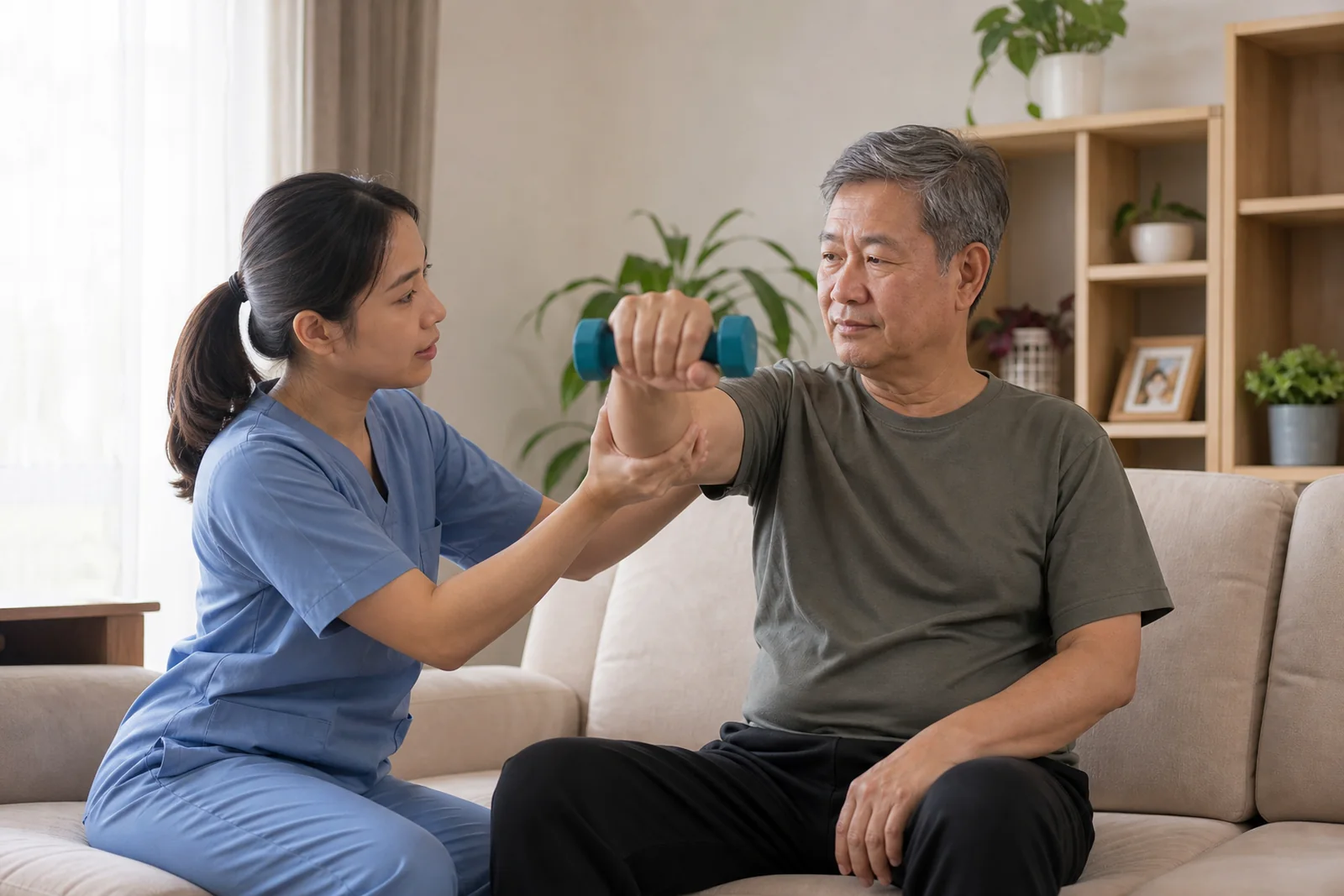
When home nursing may help
Home nursing after stroke supports movement, safe swallowing, communication, continence and daily routines, adapting as your relative regains strength and confidence. After a stroke, a home nurse helps you follow the hospital's plan safely, swallowing and medicines, skin and continence, monitoring, and coordinating rehabilitation.
This guide may be useful for
- Families preparing for the first days after stroke discharge
- People with nursing needs alongside rehabilitation goals
- Overseas or working relatives coordinating a local care roster
Build the first 72-hour home map
Walk through arrival, entry access, bed and bathroom setup, medicines, food and fluids, transfers, toileting, skin checks, sleep, appointments and emergency access. Test whether the wheelchair, commode, bed and walking aid actually fit the home before the patient arrives.
Create a one-page usual condition: alertness, speech, facial symmetry, limb movement, sensation, balance, swallowing, continence and usual assistance. Family and visiting staff need this usual condition to recognise a new change instead of assuming every difficulty belongs to the original stroke.
- Discharge and medicine documents
- Swallowing and diet plan
- Transfer, mobility and equipment plan
- usual condition and urgent contact pathway
Coordinate clinical care with rehabilitation
Nursing observations include blood pressure or other prescribed measurements, medicine response, hydration, bowel and bladder pattern, skin, wounds, tubes and signs of infection. Therapy goals may include bed mobility, sitting, transfers, walking, arm use, communication, cognition and daily activities.
Put goals into the same schedule without blurring roles. A nurse can reinforce an assessed transfer routine but should not invent exercises; a therapist should know about dizziness, wounds, unstable observations or medicine effects that alter participation.
- Shared precautions
- Distinct professional tasks
- Small measurable goals
- One communication log
Design a routine the family can sustain
Balance practice with rest, personal care, meals and meaningful family time. Fatigue and sensory overload can reduce safety and communication. Use simple choices, allow response time and keep frequently used items on the side the person can access while still following therapy advice for affected-side awareness.
Plan nights explicitly: toileting, repositioning, medicines, call system and who responds. Review the roster after the first days using actual task duration and near misses. A plan that relies on one exhausted relative is not a safe long-term arrangement.
Primary sources
These sources support the general principles on this page. The individual treating team’s instructions take priority.
- Nursing Division, Ministry of Health Malaysia: Registration and Annual Practising Certificate (APC)Malaysia · regulator guidance
- Nursing Division, Ministry of Health Malaysia: Acts and guidelines for nursing practiceMalaysia · regulator guidance
- Ministry of Health Malaysia: Management of StrokeMalaysia · clinical practice guideline
- World Health Organization: Stroke fact sheetInternational or source jurisdiction; general principles only · authoritative public guidance
Sources checked: 2026-08-02
What to consider before arranging a visit
Support that may be relevant
- Establish neurological, swallowing and functional baselines
- Separate nursing, therapy, doctor and family responsibilities
- Coordinate medicines, nutrition, skin, continence and devices
- Use a written daily schedule and urgent-change pathway
What to prepare and confirm
- Confirm the safe transfer method for this person
- Keep swallowing advice visible where food and medicines are prepared
- Schedule care around fatigue rather than filling every hour
- Assign one current handover shared by family and professionals
Ask about home nursing after stroke
Send a WhatsApp message and our team will help you arrange a home nurse visit. It notes this page and leaves room for your area. The nurse or provider confirms suitability, timing and fees before any visit.
To protect privacy, please don’t send an identity-card number, full medical record or an identifiable wound photo in your first message.
Ask about home nursing after strokeSafety boundaries and when to seek other care
- Do not give food, drink or oral medicines against swallowing instructions
- Do not copy another patient’s exercises, transfer technique or walking aid
- A fall, near-fall, choking episode or meaningful neurological change requires plan review
Call 999 for immediate danger or a medical emergency. This website and its WhatsApp enquiries do not provide emergency triage.
Questions families ask
Does a stroke patient need a nurse or a physiotherapist?
The answer depends on tasks. Clinical monitoring, prescribed procedures, wounds and devices may need nursing; movement and physical function need therapy assessment. Many people need both with clear role boundaries.
How much family help is realistic?
List tasks across 24 hours, including nights, transfers and emergencies. Assess each relative’s skill, availability and health, then add paid support and respite where gaps remain.