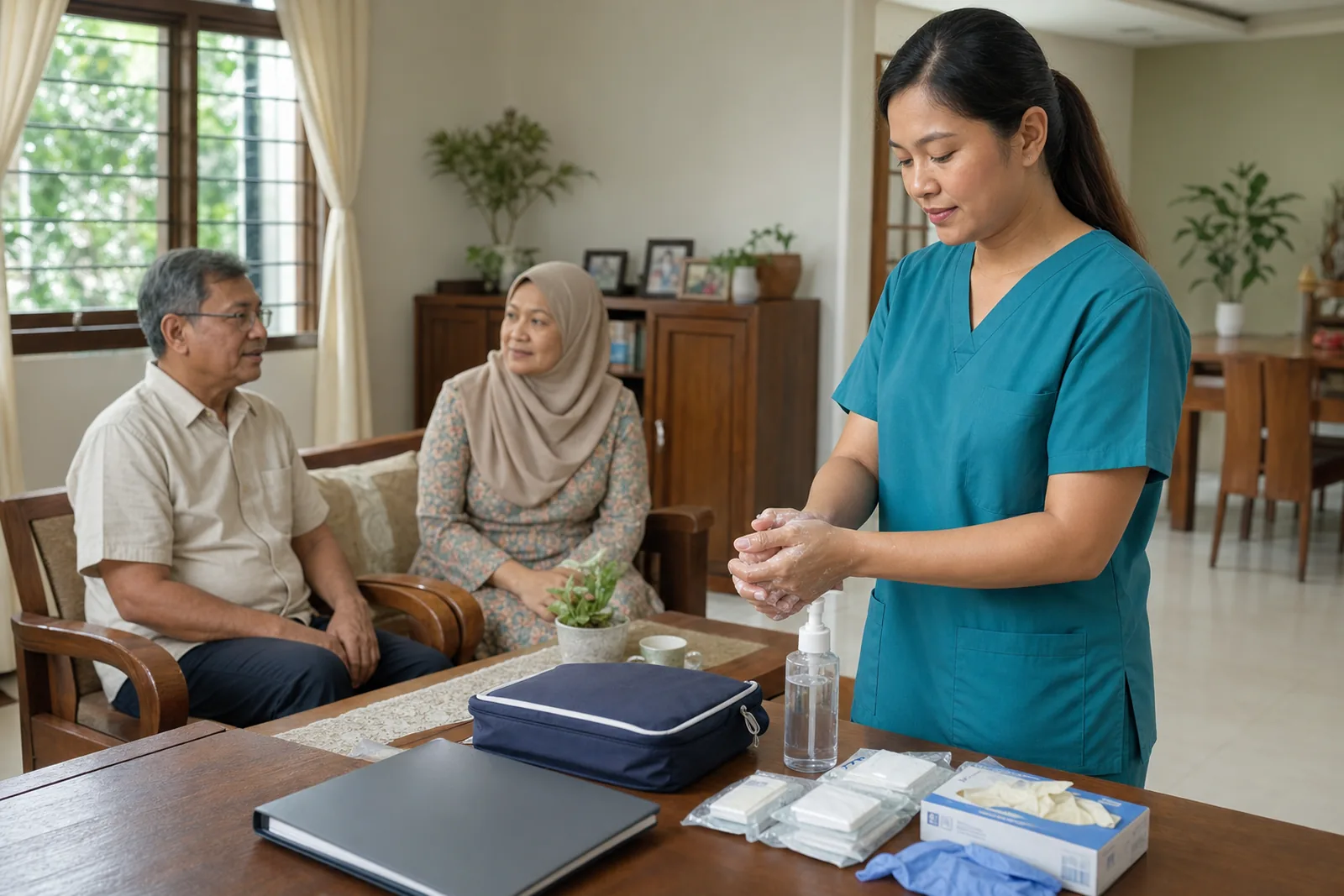
Head and Neck Cancer Home Nursing
Prepare the diagnosis and operation, neck dissection or reconstruction details, airway and tracheostomy plan, speech and swallowing assessment, permitted food and fluid texture, tube-feeding prescription, oral-care and radiotherapy instructions, wounds and drains, pain and anti-sickness medicines, baseline voice or communication, treatment dates and specialist contacts. Emergency help is required for severe breathing difficulty, a blocked or displaced airway device, uncontrolled bleeding, rapidly increasing neck swelling, blue or grey colour, collapse or inability to clear secretions. Repeated coughing or choking with intake, a wet voice, fever, reduced urine, worsening mouth pain or falling feed tolerance needs prompt review.
Who this guide is for
- Adults returning home after head or neck cancer surgery
- People receiving head-and-neck radiotherapy or systemic treatment
- Families supporting swallowing, tube feeding, tracheostomy, oral care or communication
Map airway, swallowing and communication before the first task
Record the tumour site, surgery and reconstruction, neck dissection, radiotherapy field, airway anatomy, tracheostomy or laryngectomy details, speech method and the latest speech-and-language or swallowing assessment. State whether intake is oral, tube-fed or combined and list permitted textures, positions, pacing, supervision and medicines that must use another route. Do not infer that water, soft food or crushed tablets are safe.
Establish usual breathing sounds, secretion amount and colour, cough strength, voice or communication, swallowing effort, mouth opening, saliva, pain, oral appearance, neck swelling, wound drainage, weight and urine. The family needs a recognisable baseline and a written escalation route, not a collection of generic cancer warnings.
Connect mouth, skin, feeding and hydration care
Follow the individual mouth-care plan for teeth, dentures, rinses, moisturising and prescribed medicines. Observe ulcers, white patches, bleeding, thick saliva, dryness, odour, jaw stiffness and pain without scraping tissue or recommending alcohol-based rinses. For irradiated skin or surgical wounds, use only the dressing, cleansing and product plan supplied by the team.
Deliver tube feed, water flushes and medicines according to the prescribed route, volume, rate and position. Record actual intake, nausea, reflux, abdominal symptoms, stool, tube-site condition, weight trend and urine. Reduced tolerance, repeated leakage, a blocked or displaced tube, dehydration signs or inability to complete the plan needs timely clinical or dietetic review rather than improvised dilution or extra feed.
Recognise aspiration, airway obstruction and bleeding early
During permitted oral intake, watch for coughing, choking, throat clearing, wet or changed voice, prolonged meals, food remaining in the mouth, breathlessness or fever. Stop and follow the swallowing escalation plan when these occur. Do not conduct informal food trials; aspiration may be silent and requires assessment by the appropriate specialist.
Keep prescribed emergency airway supplies together and ensure trained carers know their exact role. A blocked or displaced tracheostomy, severe breathing difficulty, inability to clear secretions, blue or grey colour, rapidly increasing neck swelling, major bleeding, collapse or reduced responsiveness requires emergency help. Protect communication and dignity while urgent care is arranged.
Primary sources
Sources support general principles; the individual treating team’s instructions take priority.
What matters before arranging a visit
Support that may be relevant
- Individual airway and swallow map
- Oral, wound and radiotherapy observations
- Prescribed tube-feeding and hydration routine
- Aspiration, bleeding and airway escalation
How a home visit is planned
- Confirm the safe route and texture for every feed or drink
- Match visits to airway, tube, wound, medicine or assessment tasks
- Choose communication methods the person can use when tired
- Define emergency equipment, contacts and family roles
Ask about head and neck cancer home nursing at home
The WhatsApp message mentions this page and leaves space for your city or suburb. The provider must confirm suitability, scope, timing and fees before any visit.
Ask on WhatsAppSafety boundaries and escalation
- Do not offer oral food, fluid or tablets outside the swallowing plan
- Do not suction, replace or manipulate a tracheostomy beyond the authorised plan and competency
- Do not dismiss noisy breathing, neck swelling, repeated choking, uncontrolled bleeding or inability to clear secretions
This website is not an emergency service. Call 999 if someone has severe breathing difficulty, chest pain, heavy bleeding, sudden weakness, loss of consciousness or rapid deterioration.
Questions families often ask
Can the family try water to see whether swallowing has improved?
Not unless the swallowing plan permits it. Water can be unsafe for some people, and improvement should be assessed through the agreed clinical pathway.
Is tube feeding enough to prevent aspiration?
Not by itself. Saliva, reflux and secretions can still enter the airway. Positioning, oral care and the individual airway plan remain important.
Updated: 29 July 2026 • Sources and clinical instructions must be confirmed for each case.