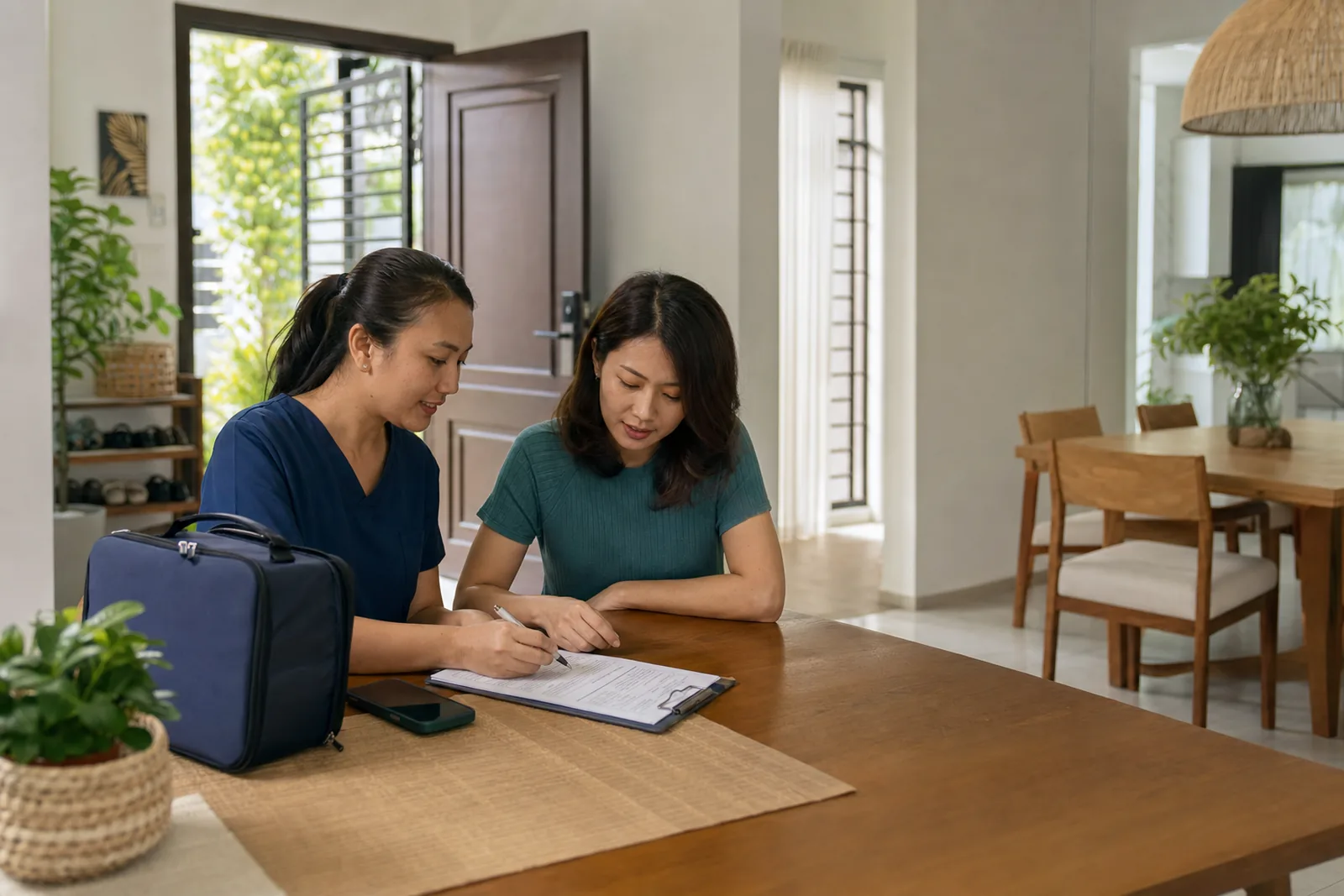
Infection Prevention During Home Nursing Visits
Before the visit, disclose relevant fever, vomiting, diarrhoea, respiratory symptoms, known infection precautions, recent exposure and household outbreaks. Clear a washable, well-lit workspace away from food, pets, fans, smoke and clutter. Provide handwashing access and keep procedure supplies sealed and correctly stored. The nurse should perform hand hygiene at the appropriate moments, use task-specific protective equipment, separate clean from used items and manage sharps or clinical waste through the agreed route. Report new exposure, contamination or infection signs promptly.
Who this guide is for
- Families preparing wound, line, tube, catheter, stoma or respiratory procedures
- Patients with higher infection vulnerability
- Households managing illness while a nursing visit is due
Share infection information before entry
Tell the provider about symptoms, confirmed infections, isolation advice, recent exposure and vulnerable household members. The provider can assess timing, staff precautions and whether another clinical route is required.
Agree how the nurse enters, where outer belongings stay and who keeps pets or visitors away. Maintain ventilation suitable for the task without directing a fan across a clean procedure field.
- Relevant symptoms
- Known precautions
- Vulnerable household members
- Controlled entry
Create clean workflow rather than a perfect room
Choose a stable washable surface with good light, nearby handwashing and enough space to separate sealed supplies, the active clean field and used items. Remove food, drinks, plants, ash, unnecessary textiles and clutter.
The nurse should clean hands before and after patient or device contact and after glove removal, following task requirements. Gloves do not replace hand hygiene and must change when moving from contaminated to clean work.
- Washable surface
- Separate zones
- Appropriate hand hygiene
- Correct glove changes
Close the procedure safely
Seal dressings, body-fluid waste and sharps according to the agreed local and provider route. Clean reusable equipment using the product and clinical instructions, observing contact time and drying. Store it away from children, pets and household chemicals.
Record breaches such as a dropped sterile item, splash, needlestick, damaged package or incorrect storage and use the responsible exposure or clinical pathway. Monitor patient-specific infection signs rather than relying on smell or appearance alone.
- Waste and sharps route
- Equipment cleaning method
- Exposure response
- Patient-specific monitoring
Primary sources
Sources support general principles; the individual treating team’s instructions take priority.
What matters before arranging a visit
Support that may be relevant
- Pre-visit illness disclosure
- Clean task-specific workspace
- Hand hygiene at correct moments
- Clean and used zones separated
- Agreed sharps and waste route
How a home visit is planned
- Tell the provider about relevant illness before arrival
- Prepare the environment for the exact procedure
- Confirm who supplies protective and disposal items
- Escalate contamination or infection signs through the clinical plan
Ask about infection prevention during home nursing visits at home
The WhatsApp message mentions this page and leaves space for your city or suburb. The provider must confirm suitability, scope, timing and fees before any visit.
Ask on WhatsAppSafety boundaries and escalation
- Do not reuse single-use products or improvise sterile supplies to avoid a delayed delivery
- Do not hide household illness because a visit is difficult to rearrange
- Do not place used sharps in ordinary household rubbish or overfilled improvised containers
This website is not an emergency service. Call 999 if someone has severe breathing difficulty, chest pain, heavy bleeding, sudden weakness, loss of consciousness or rapid deterioration.
Questions families often ask
Must the family buy protective equipment?
Confirm the exact task and provider terms. Responsibility for gloves, masks, gowns, sterile products and disposal containers should be explicit before the visit.
Should a visit be cancelled if someone has a cough?
Tell the provider before arrival. The appropriate timing and precautions depend on symptoms, exposure, patient vulnerability and the required task.
Updated: 29 July 2026 • Sources and clinical instructions must be confirmed for each case.