Overwhelmed After a New Diagnosis: Can Home Nursing Help?
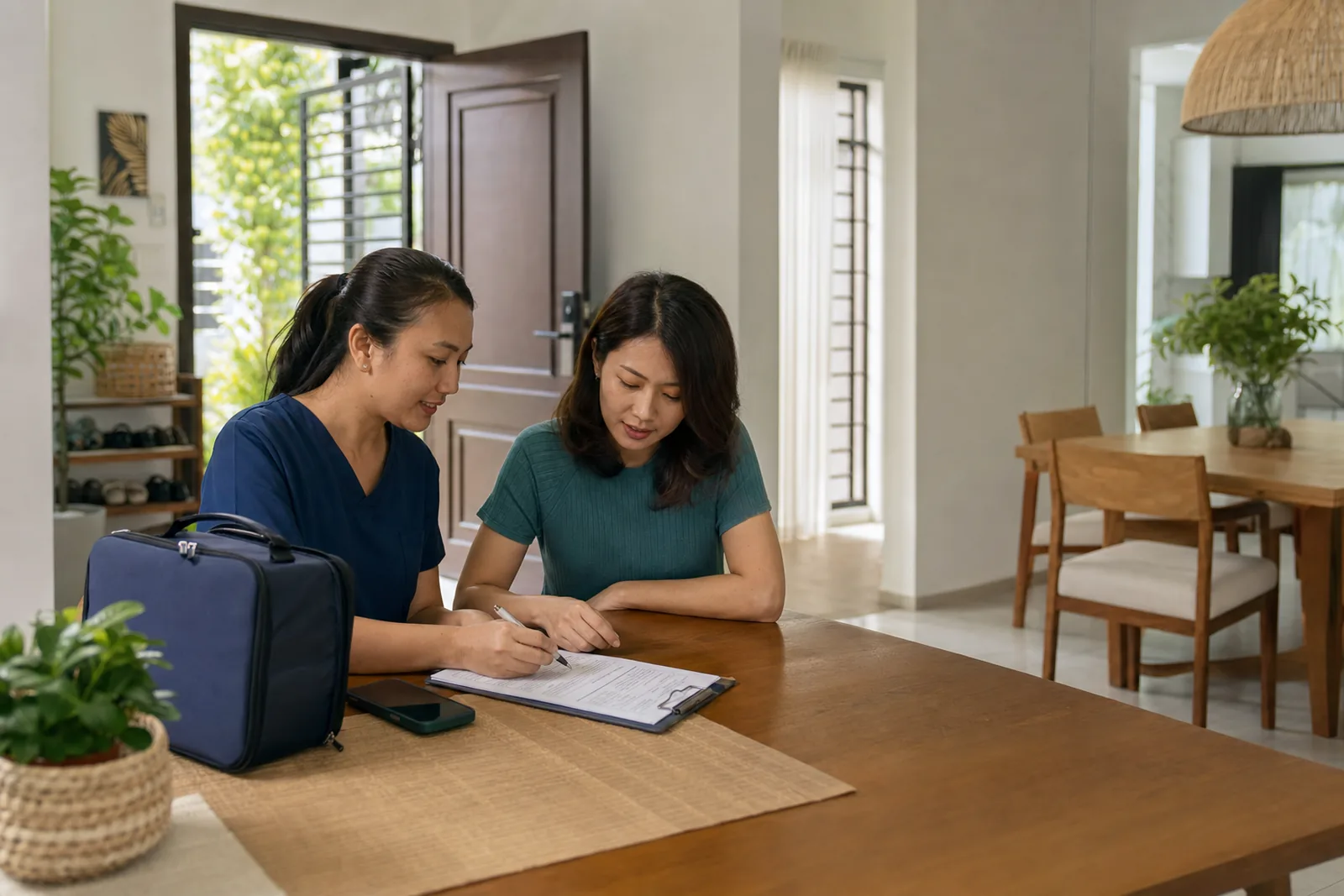
Gather the discharge summary, clinic letters, current prescriptions, medicine packets, equipment instructions, appointment dates and named contacts without rewriting them from memory. Mark today's time-critical medicines, procedures, food or fluid instructions, measurements and urgent signs. Ask a home nursing provider to assess the specific home tasks and tell it which instructions are missing or conflicting. During the visit, reconcile each item against its source, demonstrate the real equipment, use teach-back and create one current task list. Direct diagnosis, prescribing and treatment-change questions to the responsible clinician, and schedule a review after the first day or first successful cycle.
Who this guide is for
- Patients returning home with a recent diagnosis and unfamiliar instructions
- Families unsure which discharge actions are urgent, clinical or optional
- People needing hands-on teaching and a clearer first-days routine
Reduce the information pile to today's safe actions
Place every dated clinical document, prescription, medicine container, device guide and appointment message together. Keep the source and date visible. Remove superseded duplicates only after confirming which version is current. Highlight today's dose times, procedures, measurements, food or fluid instructions and warning signs. Put education that can safely wait on a separate list.
Create a question log for contradictions and blanks: different medicine strengths, no duration, unclear wound frequency, missing device limits or uncertain contact. Record who should answer each question. A family member or nurse can identify the gap, but the responsible prescriber, clinic or service must resolve decisions outside nursing scope.
Use the first home visit to test the real routine
Send enough information for the provider to assess suitability before booking. At home, show the actual medicines, supplies, storage, bathroom, bed, device and route to the door. The nurse can compare the plan with what is physically possible, observe baseline symptoms and function, perform accepted tasks and identify missing resources or unsafe timing.
Use teach-back: the patient or family explains and demonstrates the next step in their own words. Confidence alone is not proof. Check labels, hand hygiene, measurement recording, device alarms, safe disposal and who is contacted for a result outside limits. Write one current plan rather than leaving several annotated papers in competition.
Build learning in layers and keep clinical ownership visible
On day one, prioritise safe medicines, essential treatment, nutrition or fluid instructions, mobility, urgent signs and access. Add longer-term prevention, lifestyle and self-management education after the first routine works. Set a review after one full daily cycle, a treatment cycle or the next clinical appointment so new information is incorporated deliberately.
Label who owns each decision. The diagnosing or treating team owns diagnosis and treatment direction; the prescriber owns medicine orders; the provider accepts specific nursing work; the visiting nurse assesses and documents the home encounter; the patient or authorised coordinator manages agreed daily actions. Visible ownership prevents every unanswered question from being pushed onto the family.
Primary sources
Sources support general principles; the individual treating team’s instructions take priority.
What matters before arranging a visit
Support that may be relevant
- Original documents gathered before relying on memory
- Today-critical actions separated from later learning
- Home tasks assessed without inventing missing orders
- Teach-back and one current task list reduce confusion
How a home visit is planned
- Which actions must happen today and at what times
- Which tasks need a visiting nurse, teaching or another service
- Which contradictions require the responsible clinician
- What evidence shows the patient or family can manage between visits
Ask about Using home nursing after an overwhelming new diagnosis at home
The WhatsApp message mentions this page and leaves space for your city or suburb. The provider must confirm suitability, scope, timing and fees before any visit.
Ask on WhatsAppSafety boundaries and escalation
- Do not stop, combine, duplicate or change medicines because two documents appear inconsistent; contact the responsible prescriber or pharmacist
- Do not improvise a clinical procedure or device instruction that is missing
- Do not treat a visiting nurse as a substitute for urgent diagnosis or emergency care
- Call Malaysian emergency services for immediate danger and follow diagnosis-specific urgent instructions
This website is not an emergency service. Call 999 if someone has severe breathing difficulty, chest pain, heavy bleeding, sudden weakness, loss of consciousness or rapid deterioration.
Questions families often ask
Can a home nurse explain my new diagnosis?
A nurse can reinforce documented information, explain accepted nursing tasks and identify questions, but diagnosis confirmation and treatment decisions belong to the responsible clinical team. Bring the original documents and note what needs clarification.
What if my discharge papers and medicine labels disagree?
Do not guess, combine instructions or change doses. Mark the exact difference and contact the responsible prescriber, hospital service or pharmacist through the named pathway. A visiting nurse can help identify and document the discrepancy.
Updated: 29 July 2026 • Sources and clinical instructions must be confirmed for each case.